Lazarev MikhaIl

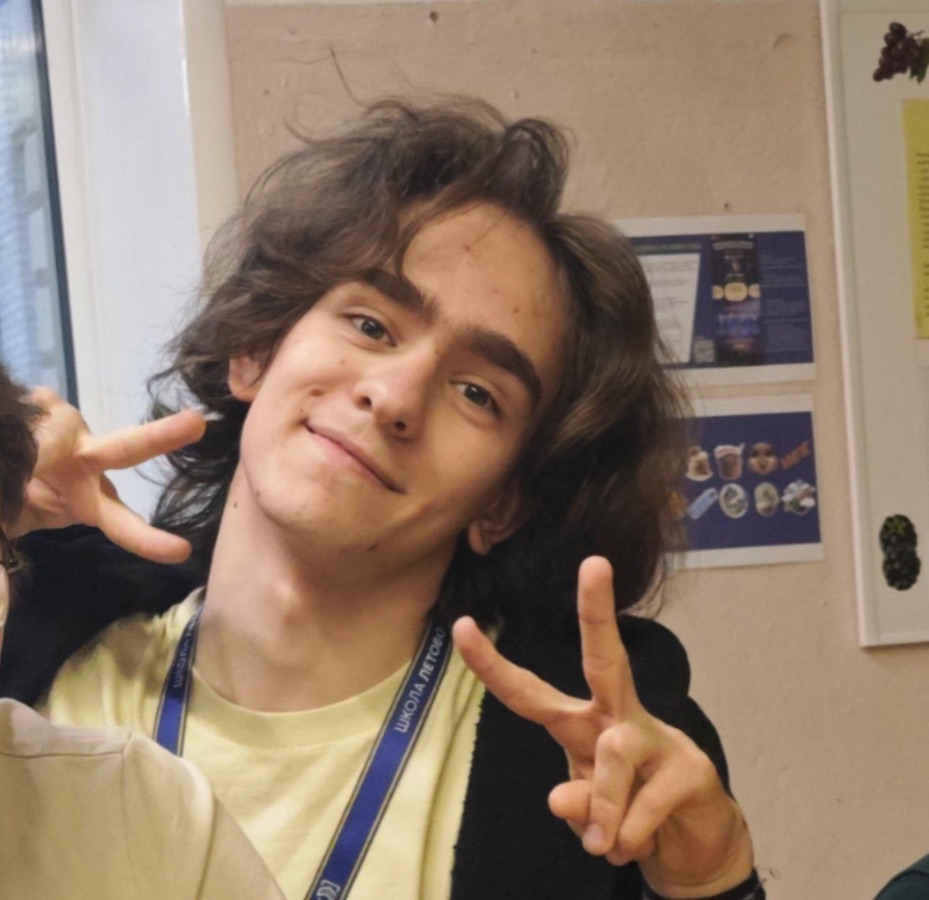
I am a high-school student of Moscow State School № 57. I am passionate about astrophysics science, and I am a firm believer that this is the most amazing field as it combines a lot of subjects and skills. Let me share some preparation materials and my projects with you

research projects


Olympiads

This is not just a part of my portfolio; it's also the sources which help prepare to ones.
fundumental astronomy
Fundumental Astronomy

Here you can find a translation of one of the based book in Astronomy. It's only half for now.
Interships in Physics & Astronomy

Not a rocket science

strongly recommended


Astronomy's projects

Due to my three year internship in RAS Arkhyz I had an opportunity to touch real researches projects. Let me share with you ones
Study of the Accuracy of Stellar Parameter Determination from Spectral Energy Distributions

This work investigates the effectiveness of using optical photometry to determine the temperatures of medium and cool stars (effective temperature < 5000 K). The studied temperature range extends from 3500 K to 10 000 K.
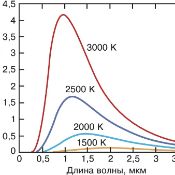
Despite the widespread use of photometric data in astrophysics, the process of deriving stellar parameters from such observations is often accompanied by significant uncertainties, which remain insufficiently explored. The main challenge lies in the fact that the wavelength corresponding to the radiation peak of both hot and cool stars falls outside the optical range.
Nevertheless, the use of optical filters in large-scale survey missions such as Gaia, Pan-STARRS, and SDSS provides vast amounts of data, making this topic particularly relevant. The study analyzes the capabilities and limitations of optical photometry for accurate stellar parameter estimation.
The results may contribute to improving the precision of data analysis in modern astronomical surveys.

Read more
Rotation Curve Construction and Analysis of Galaxies up to z = 0.2 Using 2D Spectroscopy Data

The article examines and analyzes the emission spectra of galaxies with active nuclei and redshifts up to z = 0.2, obtained with the medium-resolution long-slit spectrograph ESI, an instrument on the Keck Telescope.
The kinematics of the gas in these galaxies were studied using the Hα emission line.
Based on these data, galactic rotation curves and radial velocity dispersion profiles were constructed.
The resulting dependencies were visualized and subsequently decomposed for further analysis.

Read more
Study of Photometric and Dynamical Characteristics of Galaxies

The main goal of the project is to study galaxy catalogs and construct plots showing the relationships between various physical parameters of galaxies.
An equally important objective was to develop skills in data processing, analysis, and pattern recognition.

Read more
How to prepare for the

National Astronomy Olympiad

As a thrice Prize winner (2023, 2024, 2025) so far. I would strongly recommend for the preparation some free materials below

STEP 1. SCHOOL LEVEl

Sed feugiat porttitor nunc, non dignissim ipsum vestibulum in. Donec in blandit dolor. Vivamus a fringilla lorem, vel faucibus ante.

STEP 2. Municipal LEVEl

Spherical Astronomy, Celestial Mechanics, Blackout, Stellar magnitudes, Astronomical optics and radiation,
Introduction to Atomic and Nuclear physics, Stellar Astrophysics, Galactic and extragalactic astronomy, Instructions for registration of BDZ, Astronomy.

STEP 3. regional LEVEl

Astronomy. Olympiad level

STEP 4. national Level

Spherical Astronomy, Celestial Mechanics, Blackout, Fundamentals of astrophysical observations, Astronomical optics, Extragalactic astronomy, Practical tasks

How to prepare for the

National PHYSICS Olympiad

As a twice Prize winner (2024, 2025) so far I would strongly recommend for the preparation these free materials / courses.

9th grade

Kinematics, Dynamics: Newton's laws, elastic force, Hooke's law, gravitational forces, friction and resistance forces; Conservation laws: momentum, mechanical work, energy, conservation laws and dynamics, collisions of bodies

10th grade

Molecular structure of matter, Equations of state of an ideal gas, Saturated steam, humidity, Mathematics-1, Thermodynamics, Surface tension, Mechanical properties of solids, Mathematics-2, Electrostatics

11th grade

Electromagnetism: Lorentz force and Ampere force, law of electromagnetic induction, RL-chains; Oscillations: harmonic oscillations, damped and forced oscillations; geometric optics, Wave optics, Fundamentals of SRT, Elements of quantum physics

Experimental Physics

Direct measurements, Quantity counting, Series method, Instructions for working with equipment, Uniform and equally alternating motion, Statics, Hydrostatics, Research tasks, Thermal research, Direct current, Black boxes

PHYSICS CUP

https://physicscup.ee/ This is an online physics competition for high school and university students with short and challenging problems, intended to be more difficult than the problems of EuPhO, IPhO, and APhO. I took a bronze medal in 2025 and consider as one of the engaging and interesting olympiad. Let me share my problems' solving:
Problem 3 - 2025

Oscillating piston

Problem 4 - 2025

Axis of a lens

Problem 5 - 2025
Satellite Orbit
Publication in Kvant - 2025

Electrostatic problem

Interships

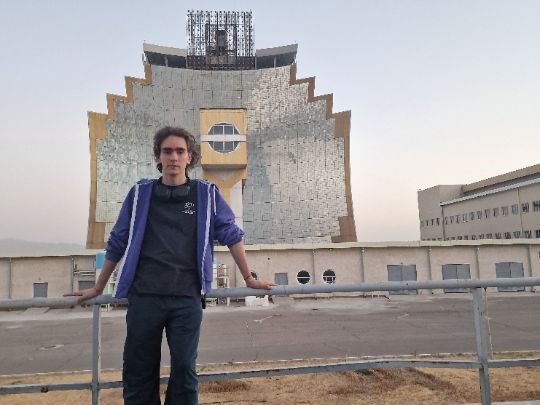
Institute of the Sun, Uzbek Academy of Science - Parkent Solar Furnace
Facility, Uzbekistan - August 2025

Participated in experiments on catalyst synthesis at the Large Solar Furnace as part of the fundamental research project “Investigation of cobalt- and nickel-based composite catalysts synthesized at the Large Solar Furnace for hydrogen generation.” I mastered methods of catalyst synthesis and analysis, and contributed to sample preparation, experimental setup calibration, and data processing.
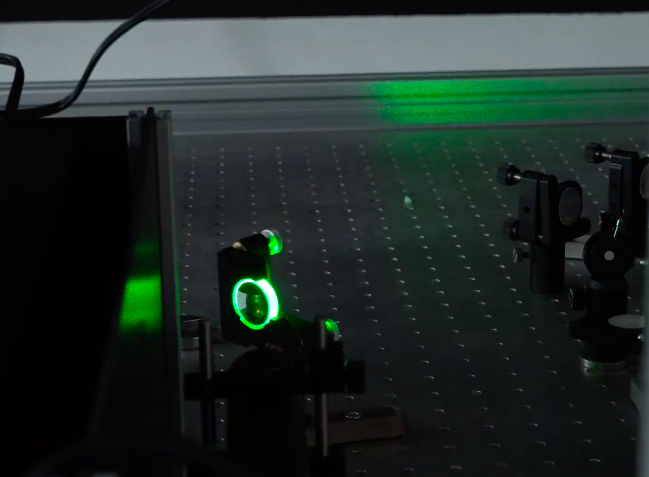
Laboratory of Advanced Emitters and Nanostructures, Department of Theoretical Physics, Moscow Pedagogical State University (MPSU) - June 2025

Conducted an experiment to measure the luminescence spectra of color centers in diamonds at cryogenic temperatures.

Gained proficiency in operating a closed-cycle cryostat, controlled sample cooling down to 7 K, performed spatial alignment to locate suitable objects, and directly measured the luminescence spectra of small ensembles of emitters.
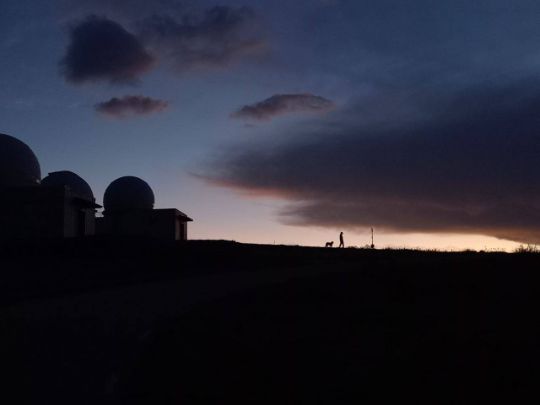
Special Astrophysical Observatory, Russian Academy of Science (SAO RAS), Arkhyz - June 2022, 2023, 2024

Analyzed stellar spectra and SEDs under guidance of E.O. Dedov
(2024). Cross-matched Gaia and Pan-STARRS catalogs and visualized stellar distributions in
Python (June 2023); Estimated Milky Way mass via virial theorem with student researchgroup (Jun 2022).

Not a rocket science
Game Theory
or why middle-distance running is mathematics under oxygen deprivation

Many people think middle-distance running is simply a matter of endurance: whoever can tolerate more pain wins.
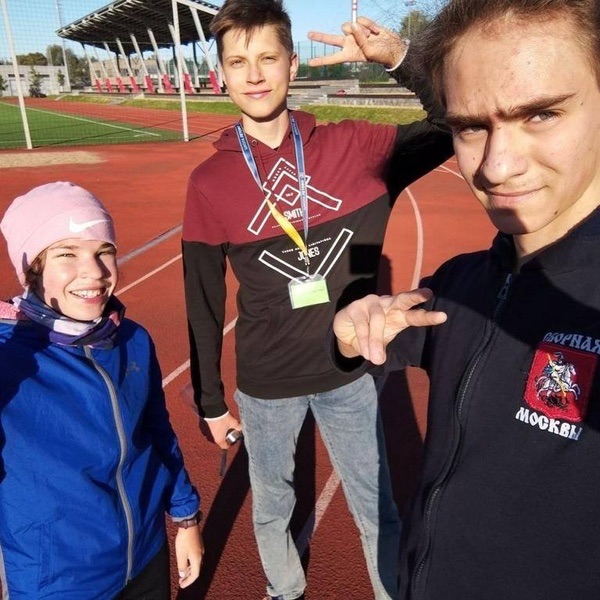
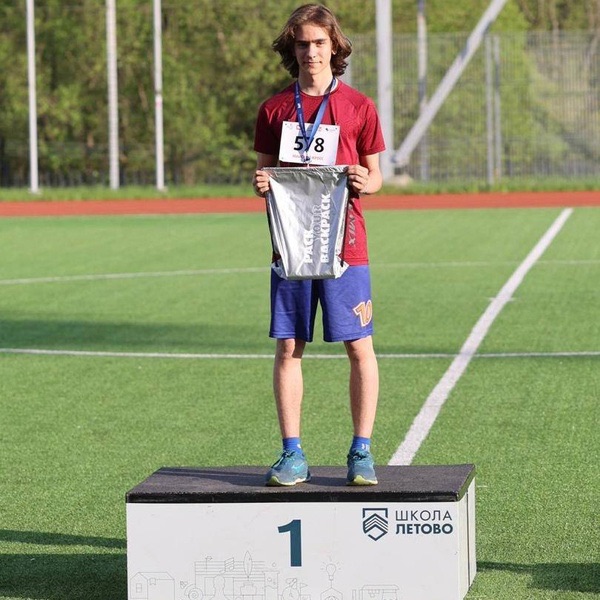
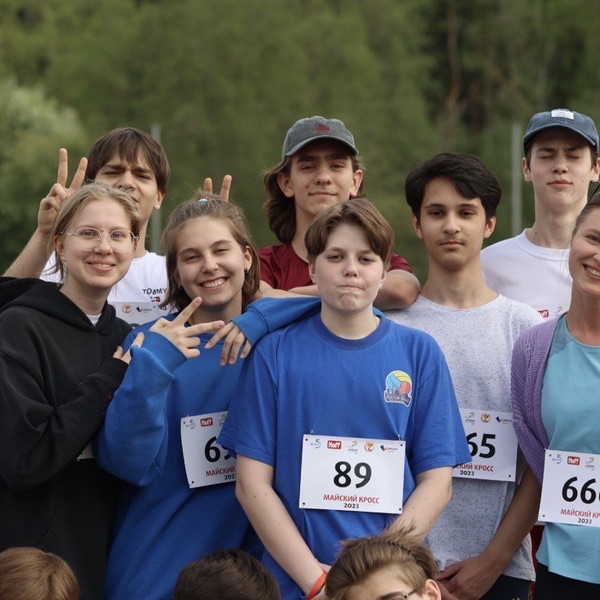
After the Moscow Championship, where I ran the 200, 400, and 800 meters over three days, it became clear that the track is a laboratory, and every race is an optimization problem: one where the cost of an error is a personal lactate hell at the finish.

Strategy and “External Processors”

In the 400 meters, I made a classic theoretician’s mistake—I calculated everything too well. I decided to start “conservatively,” to keep a reserve… and in doing so, I missed the point of no return. On this distance, it exists very concretely: if you overcautious at the start, you simply don’t have time to realize your momentum, no matter how much you want to.
It was precisely here that I understood, in practice, what coachability really means.
At a heart rate of ~180, the brain officially switches into survival mode and temporarily loses its capacity for analysis. All the elegant models you built before the start shut down like unnecessary processes. At that moment, the coach’s voice from the sideline becomes your external processor.
The command “Work! Now!” it’s an interrupt signal, a forced algorithm switch when your own sensors are already failing. Result: overtaking the entire pack at the finish and earning a second-class ranking.

Biological Safeguards

In the 200 meters, I encountered a “prisoner’s dilemma” against myself. A subconscious fear that I “wouldn’t last to the end” made me ease off at the start. Rational? From the brain’s perspective, yes. Effective? No.
It turned out to be an important experiment.
In sprinting, your internal safeguards often trigger too early. They protect you not from failure, but from discomfort.
The outcome: a third-class ranking and a clear realization—
the psychological barrier slows you down more than air resistance.

syrniki, Pain Memory, and the Laws of Thermodynamics

Having accumulated plenty of experience with how a poor pre-race breakfast can end, this time I approached nutrition with maximum discipline. Past races had made one thing abundantly clear to me: on competition days, diet is not a matter of taste, but a matter of survival. In theoretical physics, we sometimes allow ourselves to neglect friction.
In running, you cannot. When the body switches into anaerobic mode, it shuts down everything nonessential—including digestion. Any food that hasn’t yet been integrated into energy metabolism turns into dead ballast, competing for blood supply precisely when muscles need it most.
This time, the system was calibrated correctly:
no syrniki, no surprises—no emergency evacuation required.
And still, 800 meters is an honest and unforgiving distance.
It was my first start at this distance, and the experiment turned out to be unexpectedly successful: a second-class ranking. It was hard—very hard—but already controllable. Not a catastrophe, but a predictable excursion of parameters beyond acceptable limits. The conclusion remained the same: biological laws are just as strict as Kepler’s laws. They’re simply tested faster.

STRONGLY RECOMMENDED

SpaceEngine is a realistic virtual Universe you can explore on your computer. You can travel from star to star, from galaxy to galaxy, landing on any planet, moon, or asteroid with the ability to explore its alien landscape. You can alter the speed of time and observe any celestial phenomena you please.

Telescopius mission is to help astronomers with this beautiful and soul-enriching activity. Start by setting the location and date you're interested in. All info like times, altitude and azimuth values throughout the app will be calculated for your selection.

Stellarium is a free open source planetarium for your computer. It shows a realistic sky in 3D, just like what you see with the naked eye, binoculars or a telescope.

Telegram channels

Astronomy

A channel about news and educational programs in olympiad-level physics and astronomy by instructor Maxim Dmitrievich Arts­ghold.

Physics

A channel dedicated to olympiad-level physics for true connoisseurs.
Physics & Math

Announcements about important events in the fields of physics and mathematics related to school students.

English

Materials on Olympiad-level English, exams, internships, and similar topics  for high school students.